
Jeremy Mace, Director at Product Integrity Ltd., explains why product integrity matters more than ever in a furniture industry that is under pressure.

Rising material costs, higher interest rates and weaker consumer confidence are creating tougher trading conditions across both retail and supply chain. In response, many businesses are understandably focused on cost control and maintaining competitive pricing.
But while margins are tightening, expectations continue to increase.
There is growing focus on sustainability, responsible sourcing, supply chain transparency and traceability, placing greater pressure on suppliers to demonstrate stronger compliance and greater confidence in product integrity and brand credibility.
At the same time, businesses across the sector are becoming far more risk aware.
Recent National Bed Federation testing identified flammability failures within a number of mattresses tested for the UK market. Cases like this reinforce the importance of strong product assurance processes, accurate product information and ongoing due diligence.
In difficult markets, the businesses that build long-term value are usually the ones that create customer loyalty through quality, consistency and credibility, rather than competing on price alone.
Having worked within major retail environments for over 25 years, one thing is increasingly clear – purchasing decisions are now being made against a much broader set of criteria, from sourcing and sustainability considerations to compliance and risk management.
Importantly, due diligence is not about what your upstream supplier says they do – it’s about what you can evidence yourself.
For suppliers and importers, simple practical steps around documentation, risk assessment and supplier visibility can make a significant difference.
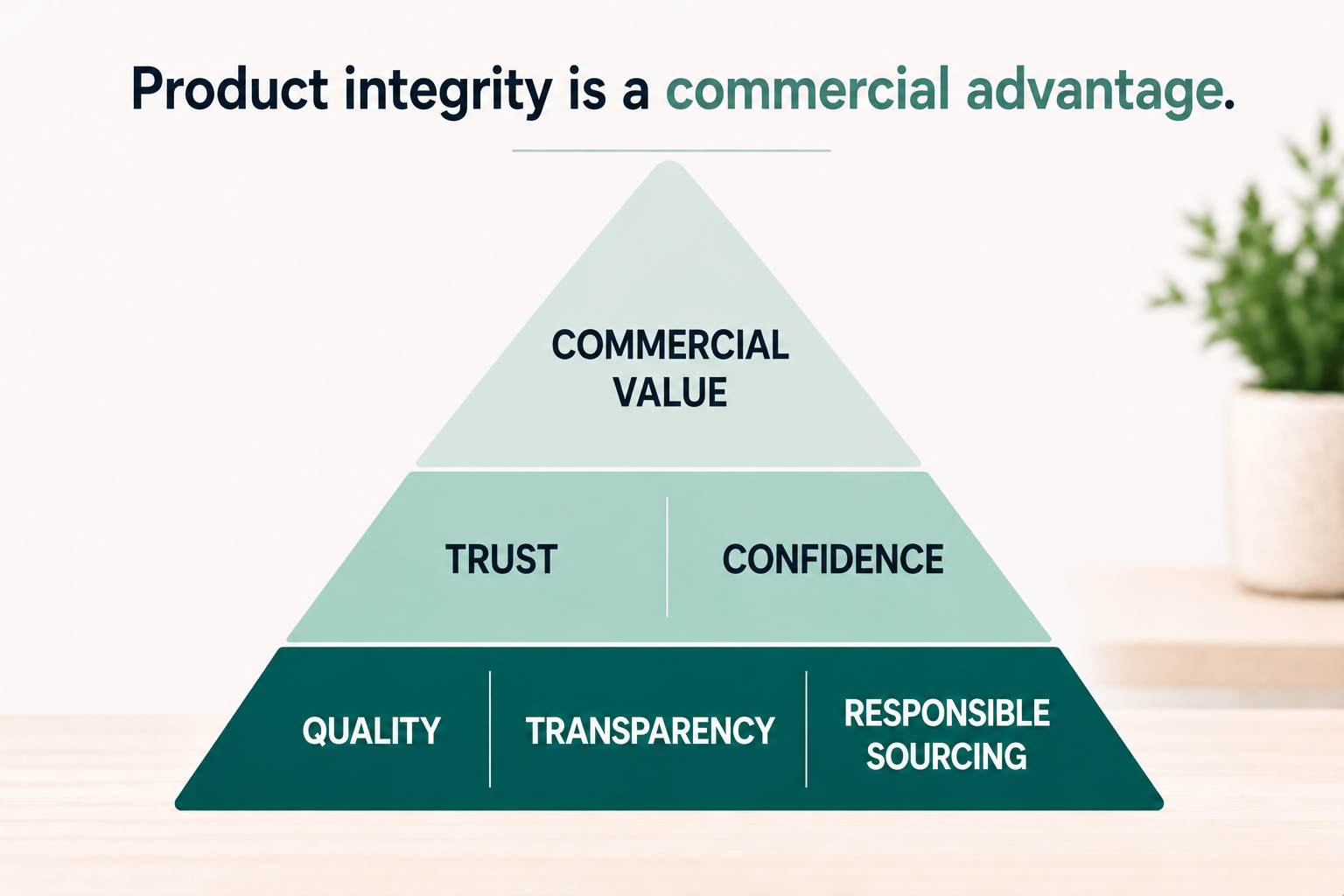
Businesses that take product integrity seriously are often in a much stronger position to strengthen their brand, build retailer trust and create long-term value.
The reality is that strong compliance and transparency are no longer just operational requirements – they are increasingly becoming commercial advantages, helping suppliers become more attractive partners for major retailers and brands.
Over the coming months, this series will explore some of the growing challenges and opportunities facing suppliers, including EUDR, sustainability expectations, packaging and Extended Producer Responsibility (EPR), Digital Product Passports, product traceability and the increasing gap between retailer expectations and supplier readiness – alongside practical advice to help businesses prepare, reduce risk and build long-term resilience.